
Breast Augmentation
Breast augmentation, also referred to as augmentation mammaplasty or breast enlargement, is a surgical procedure that increases the size and changes the shape of the breasts using implants. It is one of the most commonly performed plastic surgery procedures in Australia.
Dr Ajay Chauhan performs breast augmentation in Brisbane for patients seeking to increase breast volume, restore fullness following pregnancy or weight loss, or address asymmetry between the two breasts. Each procedure is planned according to the individual patient's anatomy, proportions, and aesthetic goals.
Breast augmentation is performed under general anaesthesia, typically as a day procedure. The type, size, shape, and placement of the implant are discussed in detail during consultation, and no two surgical plans are identical.
Breast augmentation may be appropriate for patients who wish to:
Increase breast size and volume
Restore breast fullness lost following pregnancy, breastfeeding, or weight loss
Improve breast symmetry where a significant size difference exists between the two breasts
Achieve better proportion between breast size and overall body frame
Breast augmentation does not correct significant breast ptosis (sagging). Where ptosis is present alongside a desire for increased volume, a combined breast augmentation and lift (mastopexy) may be more appropriate. Dr Chauhan will assess this during consultation.
What Does Breast Augmentation Address?
For patients who have both volume loss and breast ptosis, augmentation alone may not achieve the desired outcome. In these cases, a combined procedure - breast augmentation with mastopexy - addresses both concerns simultaneously. The lift repositions the nipple and reshapes the breast envelope, while the implant restores volume.
Dr Chauhan will assess the degree of ptosis and discuss whether a combined procedure is clinically indicated during your consultation.
Breast Augmentation with Lift (Mastopexy)

Am I a Suitable Candidate?
Breast augmentation may be appropriate if you:
Are in good general health
Have fully developed breasts
Are a non-smoker, or are able to cease smoking prior to surgery
Have realistic expectations about surgical outcomes and implant longevity
Understand that breast implants are not lifetime devices and may require revision or replacement in the future
A thorough consultation with Dr Chauhan is required to assess your suitability, discuss implant options, and plan your procedure.
The Surgical Procedure
Breast augmentation is performed under general anaesthesia, typically as a day procedure. Surgery generally takes 1 to 2 hours. The implant is placed either behind the breast tissue (subfascial plane) or partially or fully behind the pectoral muscle (submuscular or dual-plane), depending on the patient's anatomy and the implant selected.
Incision placement is usually within the inframammary fold (beneath the breast). Dr Chauhan will recommend the most appropriate approach based on your individual anatomy and the implant chosen.
What to Expect: Recovery Overview
Recovery from breast augmentation varies by individual. General guidance includes:
Most patients are able to return to sedentary work within 1 to 2 weeks
Strenuous activity, heavy lifting, and chest exercises should be avoided for a minimum of 6 weeks
A supportive surgical bra is worn post-operatively for several weeks
Some swelling, tightness, and temporary changes in nipple sensation are expected and generally resolve over several weeks to months
Final results are typically evident at 3 to 6 months, once implants have settled and swelling has fully resolved
Breast Augmentation Cost in Brisbane
The cost of breast augmentation in Brisbane varies depending on implant selection, the complexity of the procedure, theatre and anaesthesia fees, and any additional surgical requirements. Breast augmentation is generally considered a cosmetic procedure and is not covered by Medicare.
A personalised quote is provided following your consultation with Dr Chauhan. Contact our rooms to discuss costs and what is included in the surgical fee.
Understanding Breast Implants: Profile, Placement, Material and Shape
Selecting the right implant is one of the most important decisions in breast augmentation planning. Dr Chauhan will guide you through the options during consultation. The key variables are fill material, shape, profile, size, and placement.
-
Round implants provide fullness across the entire breast, with more projection in the upper pole. They are the most frequently used implant shape and are suitable for a wide range of patients.
Anatomical (teardrop) implants are shaped to mimic the natural slope of the breast, with more volume in the lower pole. They were traditionally used where a more natural-looking result is desired, however, today’s round implants contain gels that mimic the breast tissue more precisely, and anatomical implants are no longer necessary for this purpose. Anatomical implants require precise placement to avoid rotation, and despite this, they may still rotate and cause deformity
-
Implant profile refers to how far the implant projects forward from the chest wall. Options typically range from low to extra-high profile. The appropriate profile depends on the patient's base width, chest dimensions, and aesthetic goals. A higher profile implant offers more forward projection for a given volume.
-
Implants can be placed in one of the following positions:
Subglandular: Behind the breast tissue, in front of the pectoral muscle. Suitable for patients with adequate existing breast tissue, though not used commonly today.
Subfascial: Beneath the breast tissue and the covering (fascia) of the pectoral muscle, preserving muscle function and avoiding direct contact with the breast tissue.Suitable for patients with adequate existing breast tissue, and recommended by Dr Chauhan in some cases.
Submuscular: Behind the pectoral muscle.. Provides more tissue coverage and can reduce the visibility of the implant edge, particularly in patients with less natural breast tissue. Not commonly used today.
Dual-plane: A variation of the submuscular approach where the lower portion of the muscle is released, allowing the implant to interact with both muscle and glandular tissue for a more natural result. Commonly recommended by Dr Chauhan.
Dr Chauhan will recommend the most appropriate placement based on your anatomy, implant selection, and desired outcome.
-
Implant size is measured in cubic centimetres (cc) rather than cup size. Achieving a specific cup size is not a reliable goal, as cup size varies across different bra manufacturers. Dr Chauhan uses measurements, sizers, and imaging tools during consultation to assist patients in selecting a size that suits their frame and goals.
-
Silicone implants are filled with a cohesive silicone gel that closely replicates the feel of natural breast tissue. They are the most commonly used implant type in Australia. In the event of rupture, the gel often remains within the implant capsule (intracapsular) or may in some cases extrude outside of the capsule (extracapsular).
Saline implants are filled with sterile saltwater and have a firmer feel than silicone. If a saline implant ruptures, the body safely absorbs the saline and deflation is immediately apparent. Saline implants are less commonly used in the Australian market.
Breast Augmentation Consultation
Dr Ajay Chauhan performs breast augmentation in Brisbane. To organise a consultation, submit an enquiry online.
Frequently Asked Questions
-
Breast implants are not considered lifetime devices. While many patients have their implants for 10 to 20 years without issue, implants may require replacement or removal over time due to rupture, capsular contracture, changes in the breast, or changes in patient preference.
Dr Chauhan will discuss implant longevity and long-term considerations during your consultation.
-
Breast augmentation does not typically affect the ability to breastfeed, although this can depend on the incision location and surgical technique used.
Patients who plan to have children in the future should discuss this with Dr Chauhan prior to proceeding.
-
Capsular contracture occurs when the natural scar tissue that forms around an implant tightens and hardens, which can alter the shape and feel of the breast and may cause discomfort. It is one of the more common complications associated with breast implants.
Dr Chauhan will discuss the risk factors and management of capsular contracture during your consultation.
-
Subglandular placement positions the implant behind the breast tissue but in front of the pectoral muscle. Submuscular placement positions the implant behind the pectoral muscle, providing additional tissue coverage.
The appropriate placement depends on the individual patient's anatomy, existing breast tissue, and the implant selected.
-
If there is significant breast ptosis (sagging), augmentation alone may not achieve the desired result. A combined breast augmentation and lift (mastopexy) addresses both volume and breast position simultaneously.
Dr Chauhan will assess the degree of ptosis during consultation and recommend the most appropriate approach.
-
Most patients return to sedentary work within 1 to 2 weeks. Physical activity restrictions apply for 6 weeks.
Implants typically settle into their final position over 3 to 6 months, after which the final result is visible.
-
Breast augmentation for cosmetic purposes is not covered by Medicare, however, some patient are eligible if they have congenital breast anomalies, asymmetry, or severe breast ptosis. In some cases, augmentation performed as part of breast reconstruction following mastectomy may attract a Medicare rebate.
Dr Chauhan's rooms can assist in clarifying your eligibility.
-
As with all surgical procedures, breast augmentation carries risks. These include infection, bleeding, changes in nipple sensation, scarring, implant rupture, capsular contracture, asymmetry, and the possibility of revision surgery.
All risks will be discussed in detail prior to surgery.
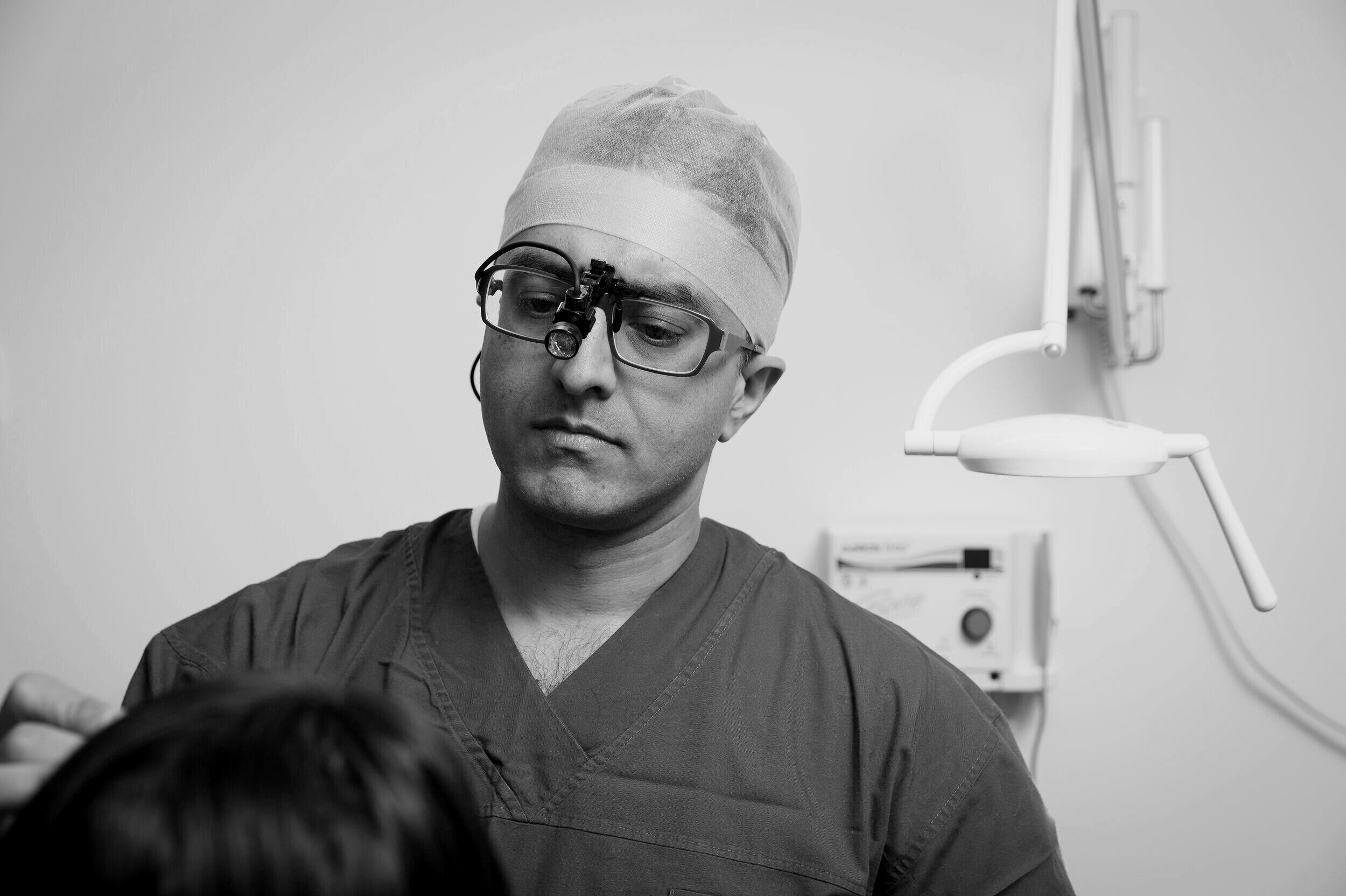
Dr Ajay Chauhan MBBS FRACS
Specialist Plastic Surgeon, Brisbane
Dr Ajay Chauhan is an Australian-trained Specialist Plastic Surgeon with Fellowship of the Royal Australasian College of Surgeons (FRACS). He completed his formal training in Plastic and Reconstructive Surgery in Brisbane in 2012, followed by post-fellowship training in France, Germany, India, and the United States.
He is a member of the Australian Society of Plastic Surgeons (ASPS), the Australasian Society of Aesthetic Plastic Surgeons (ASAPS), the American Society of Plastic Surgeons, and the World Society of Reconstructive Microsurgeons (WSRM).
Dr Chauhan consults and operates at Wesley Medical Centre, The Wesley Private Hospital, Brisbane Private Hospital, and Westside Private Hospital. His practice, Aesthetic & Reconstructive Plastic Surgery, is located at Suite 50, Level 4, 40 Chasely Street, Auchenflower.
AHPRA Registration: MED0001172663