
Skin Cancer Surgery
Australia has one of the highest rates of skin cancer in the world, and Queensland in particular has among the highest incidence of melanoma globally. The majority of skin cancers - including basal cell carcinoma (BCC), squamous cell carcinoma (SCC), and melanoma - are mainly attributed to cumulative UV radiation exposure, making sun protection an essential preventative measure for all Australians.
Surgical excision remains the primary treatment for most skin cancers. When performed by a specialist plastic surgeon, skin cancer removal is planned with both oncological adequacy and aesthetic outcome in mind - ensuring clear margins while minimising the impact of surgery on the surrounding tissue and appearance.
Dr Ajay Chauhan performs skin cancer surgery in Brisbane across a broad range of cancer types and anatomical locations. He is experienced in excision of BCC, SCC, melanoma, and less common malignancies, as well as sentinel lymph node biopsy, and the full spectrum of reconstructive techniques required to repair complex defects - from primary closure and local flaps to skin grafting and complex tissue transfer. He is a member of the Princess Alexandra Hospital Plastic Surgery unit.
Types of Skin Cancer Treated
Dr Chauhan treats the full range of skin cancer types, including:
Basal Cell Carcinoma (BCC)
BCC is the most common cancer in Australia. While metastasis is rare, BCCs can become deeply invasive if left untreated, potentially involving nerves, bone, or cartilage. Surgery is the mainstay of treatment due to its high cure rate. Dr Chauhan is highly experienced in aesthetic plastic surgical repair following BCC excision, particularly on the face and other cosmetically sensitive areas.
Squamous Cell Carcinoma (SCC)
SCC carries a risk of metastasis - primarily through lymphatic channels - which is more likely in tumours with certain pathological features such as perineural invasion, poor differentiation, or large size. Treatment is usually surgical, though radiotherapy or immunotherapy may be required in some cases. Dr Chauhan will guide patients through their surgical treatment and involve other cancer specialists where required.
Melanoma
Queensland has one of the highest rates of melanoma in the world. Melanoma treatment has advanced significantly in recent years, particularly with the introduction of immunotherapy, which has allowed surgery to be used in a more refined and targeted way. Most early stage melanomas are treated with surgical excision alone, with planned excision margins determined by the Breslow thickness of the tumour.
For intermediate and high-risk melanomas, sentinel lymph node biopsy is used to assess whether the cancer has spread to the regional lymph nodes. Dr Chauhan is experienced in melanoma surgery through his time at the Princess Alexandra Hospital and Peter MacCallum Cancer Centre, two of Australia’s leading melanoma centres.
Other Skin Cancers and Benign Lesions
Less common skin cancers - including Merkel cell carcinoma, dermatofibrosarcoma protuberans (DFSP), and other rare cutaneous malignancies - often require specialist plastic surgical care for accurate diagnosis and appropriate management. Dr Chauhan can also assist with the removal of benign lesions such as epidermoid cysts, lipomas, and dermatofibromas, particularly when located on the face or other cosmetically sensitive areas.
Surgical Excision & Reconstruction
The goal of skin cancer surgery is to remove the cancer completely while achieving the best possible functional and aesthetic outcome. For straightforward excisions with primary closure, this can often be performed under local anaesthesia as a day procedure. More complex cases - particularly those on the face, scalp, ear, nose, eyelid, or lip - require careful planning of the reconstructive approach to restore both appearance and function.
Reconstructive options following skin cancer excision include:
Primary closure: Direct wound closure where tissue laxity allows
Local flap reconstruction: Using adjacent tissue to fill the defect, maintaining skin colour and texture match
Skin grafting: Using donor skin from another site where local tissue is insufficient
Complex tissue transfer: For larger or more challenging defects requiring microsurgical expertise
For patients referred following Mohs micrographic surgery - a staged excision technique used for high-risk or complex skin cancers - Dr Chauhan provides specialist plastic surgical repair of the resulting defect.

Skin Cancer Consultation and Surgical Planning
A skin cancer consultation with Dr Chauhan includes assessment of the lesion, review of any biopsy results, discussion of surgical options, and planning of the most appropriate excision and reconstruction approach. Where relevant, Dr Chauhan works within a multidisciplinary team that may include dermatologists, medical oncologists, and radiation oncologists.
Patients may be referred by their GP, dermatologist, or treating specialist, or may self-refer for a consultation.
Medicare & Skin Cancer Surgery
Skin cancer surgery is a medical procedure and attracts Medicare rebates. The specific rebate applicable depends on the type of cancer, the size and complexity of the excision, and the reconstructive technique required. Private health insurance may contribute to surgery fees, hospital and anaesthesia costs where surgery is performed in a private hospital. Dr Chauhan's rooms can assist in clarifying your entitlements prior to surgery.
Skin Cancer Surgery Consultation
Dr Ajay Chauhan performs skin cancer surgery in Brisbane. To organise a consultation, submit an enquiry online.
Frequently Asked Questions
-
A GP or specialist referral is not strictly required, though it is highly recommended. A referral allows Dr Chauhan to access your full medical history and any prior biopsy results, which assists in surgical planning. Most patients are referred by their GP or dermatologist. Self-referrals are also accepted.
Contact our rooms directly to arrange a consultation.
-
GPs and dermatologists are happy to perform straightforward excisions of smaller, lower-risk skin cancers. Specialist plastic surgeons are typically involved when the lesion is large, in a cosmetically sensitive location such as the face, when more complex reconstruction is required, or when the cancer is high-risk.
Dr Chauhan's training in both oncological excision and reconstructive surgery means that excision and repair can be planned and performed together with a focus on both adequate clearance and optimal aesthetic outcome.
-
Sentinel lymph node biopsy (SLNB) is a surgical procedure used to determine whether melanoma (or other appropriate skin tumours) has spread to the regional lymph nodes. A radioactive tracer and/or blue dye is injected near the primary tumour site, which travels to the first lymph node in the drainage pathway (the sentinel node). This node is then removed and examined. If the sentinel node is clear of cancer, the remaining lymph nodes are unlikely to be affected.
Dr Chauhan performs SLNB as part of his melanoma surgery practice.
-
Mohs micrographic surgery is a specialised technique performed by trained dermatologists to remove skin cancer layer by layer, examining each layer under a microscope until all cancer cells are cleared. It is used for high-risk or complex cancers, particularly on the face. Following Mohs surgery, a specialist plastic surgeon may be required to repair the resulting defect.
Dr Chauhan provides plastic surgical repair following Mohs surgery, using local flaps, skin grafts, or other techniques as appropriate.
-
Yes. Skin cancer surgery is a medical procedure and attracts Medicare rebates. The rebate applicable depends on the type and complexity of the excision and reconstruction. Private health insurance may also contribute to hospital costs.
Dr Chauhan's rooms can assist in clarifying what you are entitled to claim prior to surgery.
-
The ABCDE rule is a useful guide for identifying potential melanomas: Asymmetry (differences between the two halves of a lesion), Border irregularity (fuzzy or irregular edge), Colour variegation (more than one colour within the lesion), Diameter greater than 6mm, and Evolving (any change in a lesion over time). Additional warning signs include bleeding, itching, and pain.
Any changing or concerning skin lesion should be assessed by a GP or dermatologist promptly.
-
Reconstruction following skin cancer excision depends on the size and location of the defect. Smaller defects in areas with sufficient tissue laxity are often closed directly. More complex defects - particularly on the face, nose, ear, and eyelid - may require local flap reconstruction using adjacent tissue, skin grafting, or in complex cases, more advanced tissue transfer techniques.
Dr Chauhan will discuss the most appropriate reconstructive approach during your consultation.
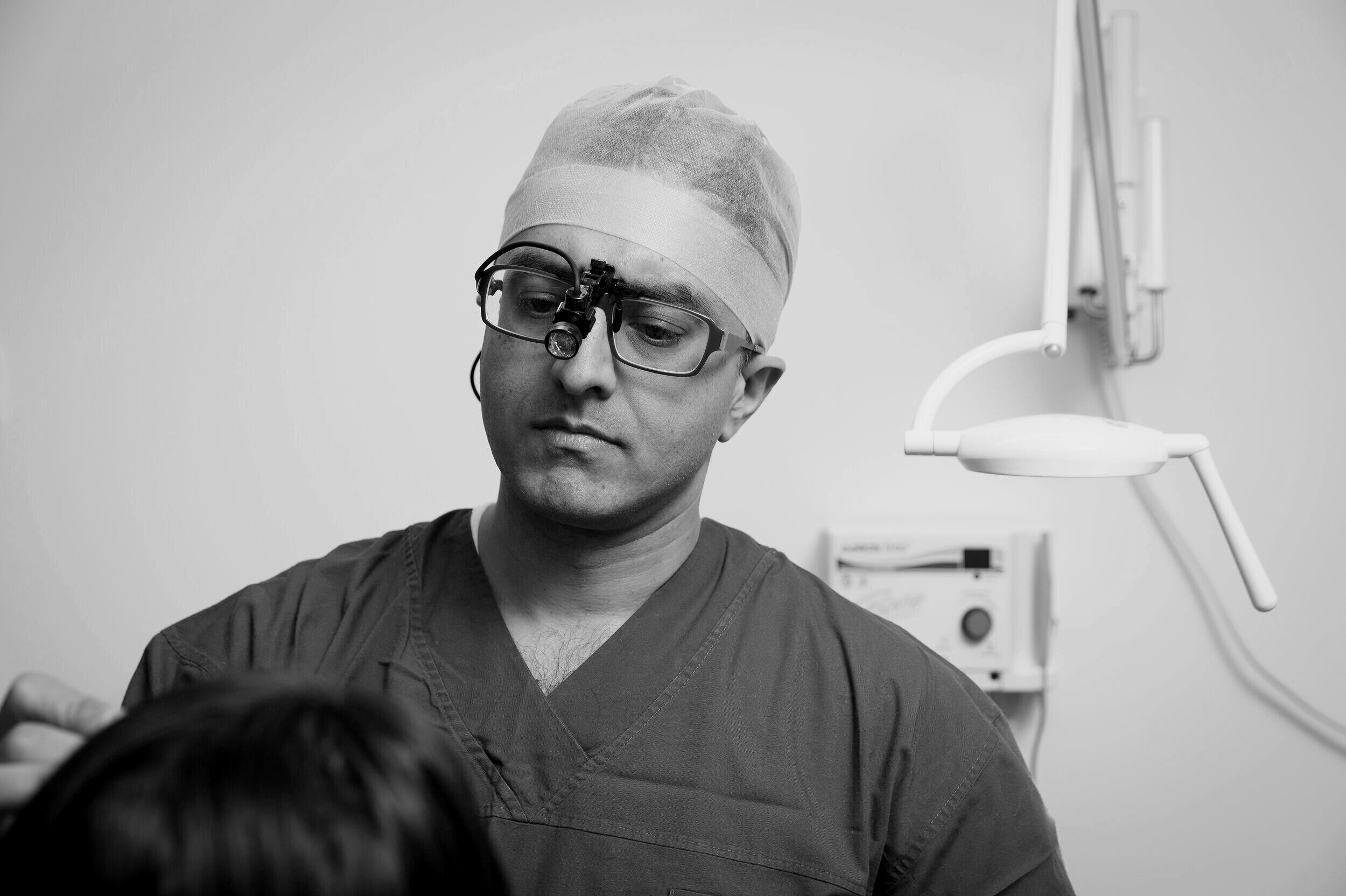
Dr Ajay Chauhan MBBS FRACS
Specialist Plastic Surgeon, Brisbane
Dr Ajay Chauhan is an Australian-trained Specialist Plastic Surgeon with Fellowship of the Royal Australasian College of Surgeons (FRACS). He completed his formal training in Plastic and Reconstructive Surgery in Brisbane in 2012, followed by post-fellowship appointments at the Peter MacCallum Cancer Centre in Melbourne and Monash Health, where he developed significant experience in oncological and reconstructive surgery.
Dr Chauhan is a member of the Princess Alexandra Hospital melanoma unit and has extensive experience in melanoma surgery, including sentinel lymph node biopsy. He is experienced across the full range of skin cancer types and reconstructive techniques, from local flap repair to complex microsurgical tissue transfer.
He is a member of the Australian Society of Plastic Surgeons (ASPS), the Australasian Society of Aesthetic Plastic Surgeons (ASAPS), the American Society of Plastic Surgeons, and the World Society of Reconstructive Microsurgeons (WSRM).
Dr Chauhan consults at Wesley Medical Centre, Auchenflower, and operates at The Wesley Private Hospital, Brisbane Private Hospital, and Westside Private Hospital.
AHPRA Registration: MED0001172663