
Rhinoplasty
Rhinoplasty is a surgical procedure that reshapes the nose to improve its appearance, its function, or both. The nose is the central feature of the face, and even subtle changes to its size, shape, or symmetry can have a significant effect on overall facial balance and proportion.
Rhinoplasty surgery can address a wide range of concerns including the size of the nose relative to the face, the shape of the nasal bridge and tip, the width of the nostrils, asymmetry, and deviation of the nose. Where a structural issue affecting breathing is also present, rhinoplasty is usually combined with a septoplasty - a procedure that corrects a deviated nasal septum - to address both form and function simultaneously. This combined approach is known as septorhinoplasty.
Dr Ajay Chauhan performs rhinoplasty in Brisbane with an understanding that the nose must be considered in the context of the whole face. The goal is a result that improves the patient's functional and aesthetic concerns while maintaining facial harmony. Structural support is a priority so that results are stable and lasting.
What Can Rhinoplasty Address?
Rhinoplasty can address both aesthetic and functional concerns of the nose, including:
Reduction or refinement of overall nasal size
Correction of a dorsal hump (bump on the bridge of the nose)
Refinement of a broad, bulbous, or poorly defined nasal tip
Correction of nasal asymmetry or deviation
Narrowing of wide nostrils
Improvement of the relationship between the nose and the lips (nasolabial angle)
Correction of a deviated septum causing nasal airway obstruction (septorhinoplasty)
Structural support to improve breathing while also reshaping the nose
Open vs. Closed Rhinoplasty
Rhinoplasty can be performed using either an open or a closed technique. The choice between the two depends on the complexity of the changes required and the surgeon's assessment of the best approach to achieve the desired result.
Open Rhinoplasty: Involves a small incision across the columella (the strip of tissue between the nostrils), in addition to incisions inside the nose. This approach provides direct visualisation of the nasal structures and allows more precise reshaping, particularly of the tip. It is the preferred approach for more complex cases. The columellar scar is typically inconspicuous once healed.
Closed Rhinoplasty: All incisions are made inside the nostrils, with no external scar. This approach is suitable for cases where less extensive reshaping is required and where the nasal tip does not need significant modification.
Dr Chauhan will recommend the most appropriate technique based on your anatomy and the changes you wish to achieve, and will explain the reasoning during your consultation.
Am I a Suitable Candidate?
Rhinoplasty may be appropriate if you:
Have fully developed nasal structures - rhinoplasty is generally not performed until growth is complete, typically in the late teens
Are in good general health with no medical conditions that significantly impair healing
Are a non-smoker, or are prepared to cease smoking prior to surgery
Have a specific, clearly defined concern about the appearance or function of your nose
Have realistic expectations about surgical outcomes and understand that rhinoplasty is one of the more technically demanding procedures in plastic surgery
A thorough consultation with Dr Chauhan is required to assess your nasal anatomy, discuss your goals in detail, and determine the most appropriate surgical plan.
Septorhinoplasty: Function & Form
Septoplasty corrects a deviated nasal septum - the cartilaginous and bony partition that divides the nasal cavity into two passages. A deviated septum can cause nasal obstruction, difficulty breathing through one or both nostrils, and snoring. It is commonly present in patients who also have aesthetic concerns about the shape of their nose.
Rhinoplasty and septoplasty are frequently performed together (septorhinoplasty) as the two procedures complement each other technically. Correcting the septum also provides structural support that helps maintain the shape of the nose over time, contributing to longer-lasting aesthetic results.
Where functional obstruction is clinically documented, a Medicare rebate may apply to the septoplasty component of the procedure.

The Surgical Procedure
Rhinoplasty is performed under general anaesthesia, typically as a day procedure. Operative time varies from 1.5 to 3 hours or more depending on the complexity of the case.
Using either an open or closed approach, the nasal structures - including the skin, cartilage, and bone - are carefully reshaped to achieve the planned changes. Where a septoplasty is required, this is performed at the same time.
Internal splints or packing may be used in some cases.
An external nasal splint is applied at the end of surgery and worn for approximately one week to protect the nose during early healing.
What to Expect: Recovery Overview
Rhinoplasty recovery requires patience - the nose continues to refine for up to 12 months or longer after surgery. General recovery guidance includes:
Significant swelling and bruising of the nose and under the eyes are expected in the first 1 to 2 weeks
The external splint is removed roughly one week post-operatively
Most patients feel comfortable presenting in public at 2 to 3 weeks, though residual swelling persists
Return to sedentary work is typically possible within 1 to 2 weeks
Strenuous activity and contact sports should be avoided for a minimum of 6 weeks
The majority of swelling resolves by 3 to 6 months - tip refinement and final result continue to develop over 12 months or more
Dr Chauhan will provide detailed pre- and post-operative instructions, and follow-up appointments are scheduled at regular intervals to monitor healing progress.
Rhinoplasty Cost in Brisbane
The cost of rhinoplasty in Brisbane varies depending on the complexity of the procedure, the technique used, theatre and anaesthesia fees, and whether a septoplasty is performed concurrently.
Where nasal obstruction is clinically documented and septoplasty is required, a Medicare rebate may apply to that component of the procedure.
A personalised quote is provided following your consultation with Dr Chauhan.
Contact our team to discuss costs, Medicare eligibility where applicable, and what is included in the surgical fee.
Rhinoplasty Surgery Consultation
Dr Ajay Chauhan performs rhinoplasty in Brisbane. To organise a consultation, submit an enquiry online.
Frequently Asked Questions
-
Open rhinoplasty uses a small external incision across the columella (between the nostrils) combined with internal incisions, providing direct access to the nasal structures for precise reshaping.
Closed rhinoplasty uses only internal incisions with no external scar and is suited to less complex cases. Dr Chauhan will recommend the most appropriate approach based on your anatomy and the changes required.
-
Septorhinoplasty combines rhinoplasty (nose reshaping) with septoplasty (correction of a deviated septum). The two procedures are frequently performed together as they complement each other technically.
Correcting the septum improves nasal airflow and also provides structural support that contributes to longer-lasting aesthetic results. Where a functional indication is clinically documented, a Medicare rebate may apply to the septoplasty component.
-
Rhinoplasty performed purely for cosmetic reasons is not covered by Medicare. However, where a deviated septum causing nasal obstruction is also corrected (septoplasty), a Medicare rebate may apply to that functional component. Dr Chauhan's team can assist in assessing your eligibility prior to surgery.
-
Rhinoplasty has one of the longest recovery timelines of any cosmetic procedure. While the majority of swelling resolves by 3 to 6 months, the tip continues to refine and the final result continues to develop over 12 months or more.
Patience is essential - early assessment of the result is not representative of the final outcome.
-
Rhinoplasty should be planned to maintain or improve nasal breathing function. Where a deviated septum is contributing to obstruction, septoplasty is performed concurrently to address this.
Rhinoplasty that does not account for the structural integrity of the nose can compromise airflow, which is one of the reasons Dr Ajay Chauhan emphasises structural support as a core principle of his approach.
-
As with all surgical procedures, rhinoplasty carries risks. These include bleeding, infection, adverse scarring, asymmetry, changes in skin sensation, breathing difficulties, and the possibility of revision surgery.
Rhinoplasty is one of the more technically demanding procedures in plastic surgery, and the risk of requiring a revision procedure is higher than for many other operations. All risks will be discussed in detail prior to surgery.
-
Revision rhinoplasty refers to any procedure performed on a nose that has previously undergone surgery. It is considerably more complex than primary rhinoplasty due to altered anatomy, scar tissue, and changes in structural support from the original procedure.
Dr Ajay Chauhan can assess the feasibility and planning of revision cases during consultation.
-
The external splint is removed at approximately one week. Most patients return to sedentary work within 1 to 2 weeks and feel comfortable in public at 2 to 3 weeks. Strenuous activity is avoided for 6 weeks.
The majority of swelling resolves by 3 to 6 months, with final refinement continuing over 12 months or more.
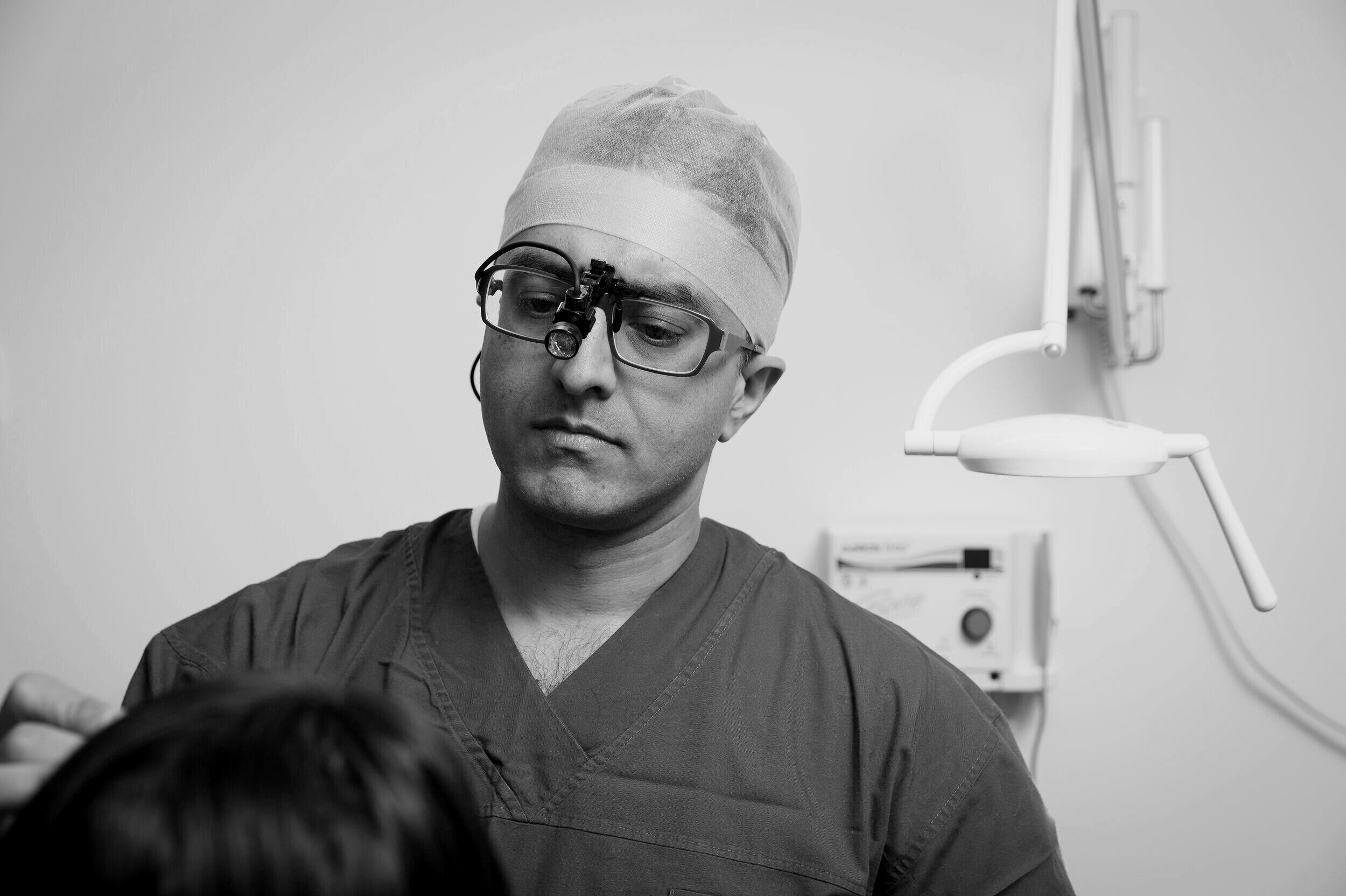
Dr Ajay Chauhan MBBS FRACS
Specialist Plastic Surgeon, Brisbane
Dr Ajay Chauhan is an Australian-trained Specialist Plastic Surgeon with Fellowship of the Royal Australasian College of Surgeons (FRACS). He completed his formal training in Plastic and Reconstructive Surgery in Brisbane in 2012, followed by post-fellowship training in France, Germany, India, and the United States.
He is a member of the Australian Society of Plastic Surgeons (ASPS), the Australasian Society of Aesthetic Plastic Surgeons (ASAPS), the American Society of Plastic Surgeons, and the World Society of Reconstructive Microsurgeons (WSRM).
Dr Chauhan consults at Wesley Medical Centre, Auchenflower, and operates at The Wesley Private Hospital, Brisbane Private Hospital, and Westside Private Hospital.
AHPRA Registration: MED0001172663